

Choosing Your First Fishing Kayak Without Regret
I remember standing in the aisle of a big-box outdoor store, staring at a wall of kayaks, feeling completely out of my depth. Sit-on-top or sit-inside? Ten feet or twelve? Pedal drive or paddle? The salesperson was helpful but clearly wanted to sell me the most expensive boat on the rack. I walked out empty-handed and spent the next month researching. That was five years ago, and I've owned three kayaks since. Here's what I wish someone had told me at the start.
The first question isn't about the kayak. It's about the water. If you're fishing small ponds and calm rivers, a ten-to-twelve-foot sit-on-top is almost always the right choice. It's stable, easy to get in and out of, and you can stand up in many models, which is a game-changer for sight fishing. If you're paddling longer distances on bigger water, a longer boat tracks better and moves faster. If you're dealing with whitewater or tight creeks, a shorter, more maneuverable boat is better.
Weight, Storage, and the Real Cost of Ownership
Nobody talks enough about weight. A kayak that weighs eighty pounds is a joy on the water and a nightmare in the parking lot. If you're loading by yourself, think hard about whether you can lift the boat onto your roof rack after a long day. I've watched grown adults struggle with heavy kayaks and swear they'd never go again. If you have a truck bed or a trailer, weight matters less. If you're car-topping, it matters a lot.
Storage is the other hidden factor. Kayaks take up space. A twelve-foot boat doesn't fit neatly in a garage corner. Measure your storage area before you buy. I've seen people buy beautiful kayaks and then leave them outside under a tarp because they didn't have anywhere to put them. That's how boats get ruined.
Paddle or Pedal, and When to Upgrade
Pedal-drive kayaks are fantastic. They let you keep your hands free for fishing and hold position in wind and current. But they're heavier, more expensive, and more complex. My advice is to start with a paddle kayak unless you're absolutely sure you'll be fishing big, open water in windy conditions. You can always upgrade later, and a good paddle kayak holds its value well.
Whatever you choose, buy used if you can. Kayaks are durable, and a gently used boat can save you hundreds of dollars. Check the hull for cracks, the seat for wear, and the rudder or skeg for function. If you can, test paddle before you buy. A boat that feels stable in the store might feel tippy on the water, and a boat that looks slow might be exactly what you need. The right kayak is the one that gets you out there, not the one with the best reviews.





The kayak market is overwhelming, but a few simple questions will narrow it down to the right boat for you.
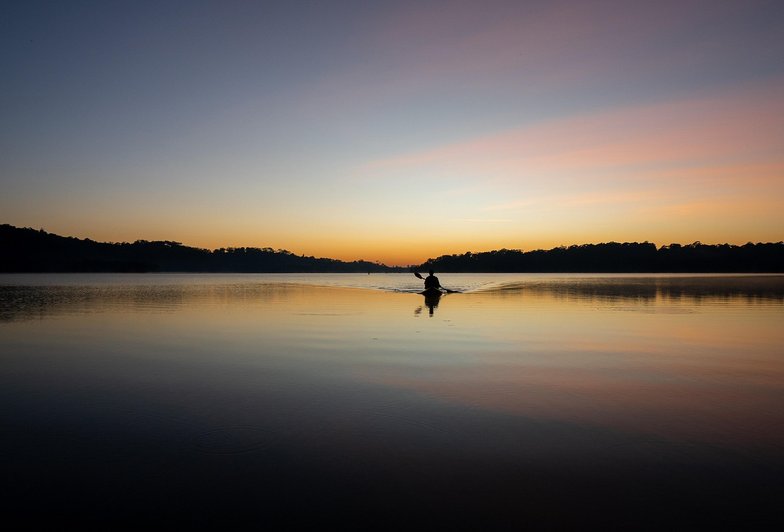
Sometimes the best paddling trips are the ones you stumble into by accident, on water that doesn't make the guidebooks.
Nothing beats the explosion of a bass hitting a surface lure, and small ponds are the perfect place to learn the game.
Fog on the water is more than atmosphere — it changes how fish behave, how sound travels, and how you should paddle.
Creeks are cramped, snaggy, and full of fish that rarely see a lure — here is how to fish them without losing your mind or your tackle.